Publications
How to Creating Filesystems
There are two types of filesystems you will need to learn how to make in order to get your Linux multi-partition system up and running are swap and ext2.
–Creating a swap filesystem–
The command for this is mkswap. You have to be root to run this, of course. If you get a “command not found” error, then you need to enter the full path, which is: /sbin/mkswap
The options for mkswapare (ripped from the man page):
How to Anonymous ftp Server Configuration
We will use only anonymous ftp and will not allow any non-anonymous user any access. Here we describe the anonymous ftp server setup that allows anonymous uploads. Any self-respecting guide on the subject will tell you that “this is a bad thing”. But how is it worse than allowing users to FTP from untrusted location and transfer their passwords in clear text? Not everybody (especially, using Windows) can easily setup an FTP tunnel via ssh.
Setup User Authentication on Certain Page
If you want to have your website have user/password restrictions, you must have Apache installed and running. There are only 2 steps to this:
1. create a file with user names and passwords
2. tell the server what you want to be protected and which users are allowed
For the first step, you will use the program htpasswd. It creates a user file and can add or modify users. For security reasons, you should not create the file under the root directory. For example, made it under /usr/local/etc/httpd/ and will use this to show examples. To create a new user file and add the username “xyz” with the password “abc123” to the file /usr/local/etc/httpd/users:
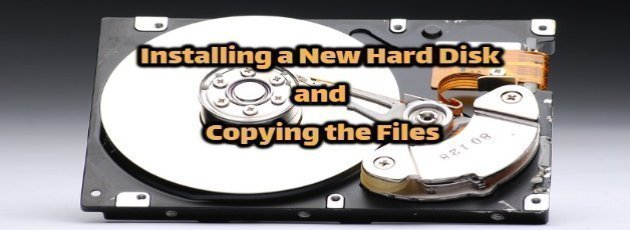
Installing a New Hard Disk and Copying the Files
Formatting the new disk
Use the following command to format Linux partitions using ext2fs on the new disk:
mkfs.ext2 /dev/hdb1
To check the disk for bad blocks (physical defects), add the -c option just before /dev/hdb1.
If the new disk will have more than one Linux partition, format the other partitions with mkfs.ext2 /dev/hdb2, mkfs.ext2 /dev/hdb3, and so on. Add the -c option if desired.
Note: With older distributions, the command mkfs -t ext2 -c /dev/hdb1 didn’t check for bad blocks under any of Red Hat, Debian or Slackware, contrary to what the man page stated. This has now been fixed.
How to Creating A Page Counter In PHP
OK, everybody has a hit counter on their page. But how many people actually make their own? Ya well, I am going to show you how to create a simple page counter in PHP.
This page counter writes to a file that you have created, storing how many hits you have received. The script then reads the text file (counter.txt) and displays it on the page. Let’s take a look at this code in action.